
 Google Play
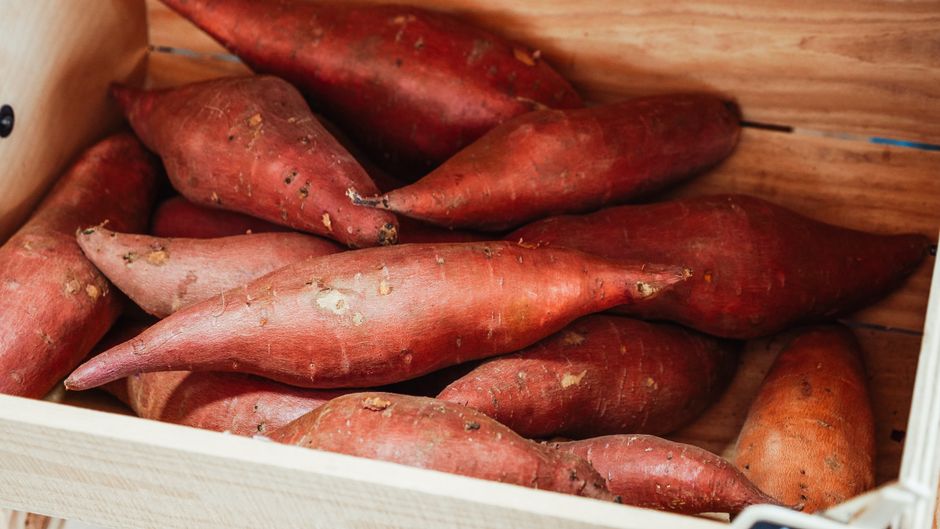
Sweet potato has built a reputation as the "healthy" potato, often positioned as a straightforward upgrade over the white kind. The real comparison is more specific than that, and worth breaking down rather than taking the reputation at face value.
The nutrient profile isn't close
One medium sweet potato supplies more than a full day's vitamin A, almost entirely from beta-carotene — a white potato of the same size has essentially none. Sweet potato also edges ahead on vitamin C, while white potatoes typically carry more potassium per potato. Both are naturally sodium-free and fat-free before you touch them.
Fiber, blood sugar, and glycemic index
Sweet potatoes generally have a somewhat lower glycemic index than white potatoes, though both vary a lot by variety and cooking method — a baked russet spikes blood sugar faster than a boiled one, and the same is true for sweet potatoes. Leaving the skin on and pairing either with protein or fat blunts the spike more than swapping potato types does.
Cooking method changes the number
Baking concentrates a potato's natural sugars as water evaporates during cooking, which tends to push the glycemic index higher than boiling the same potato does. This holds for both types, which means the cooking method you choose can matter as much as, or more than, which potato you start with — a boiled sweet potato and a baked white potato are closer in blood sugar impact than the reputation of either would suggest.
The topping is usually the real issue
Both potatoes start out as a genuinely healthy, minimally processed carbohydrate. What turns them into a sodium or saturated-fat problem is what gets added: butter, sour cream, cheese, bacon bits, or a trip through a deep fryer. A plain baked potato of either kind is a reasonable side; loaded fries are a different food entirely.
Skin on versus skin off
The skin of both potatoes carries a meaningful share of the fiber and, in white potatoes specifically, a large share of the potassium as well — peeling either one before cooking throws away nutrients that were otherwise part of the deal. A well-scrubbed potato eaten skin-on is a simple, no-cost way to get more out of either vegetable, and it saves the prep time peeling takes besides.
So which one should you eat
Sweet potato wins narrowly on vitamins and glycemic response, making it a slightly better everyday default if you're tracking blood sugar closely. But a plain white potato, prepared simply, isn't something to avoid — preparation matters far more than color.
Both are also naturally rich in resistant starch when cooked and then cooled — a type of starch that resists digestion in the small intestine and behaves more like fiber, feeding gut bacteria instead of raising blood sugar the way the same starch does when eaten hot. A potato salad made from either type, chilled rather than served hot, is a genuine way to get more of this benefit, not just a serving suggestion.
Neither potato deserves the reputation of being an "unhealthy" food on its own, and treating either one as something to avoid entirely tends to miss the more useful point: portion size, preparation, and what's served alongside the potato do more to determine whether a meal fits your goals than the specific variety sitting on the plate.
Roasting cut potatoes of either type in a modest amount of olive oil, rather than deep-frying, keeps most of the flavor and texture people actually want from fries while avoiding the calorie and often the sodium load that comes from commercial frying oil and heavy salting. A hot oven and a thin, even cut get surprisingly close to the real thing, and it's a swap worth trying before writing off potatoes entirely for anyone missing fries specifically.
Portion is also worth naming directly: a potato the size of a computer mouse is a reasonable single serving for most people, while the oversized baked potatoes served at many restaurants can be two or three servings on one plate. Splitting one, or simply eating half and saving the rest, is a simple way to enjoy either potato without the portion doing more work against your goals than the food itself ever would.
Storing potatoes properly also affects their nutrition and safety over time: keeping them in a cool, dark, well-ventilated place rather than the refrigerator preserves texture and slows sprouting, while any potato that has turned green under the skin or sprouted significantly should have those parts cut away generously or the potato discarded, since green skin can indicate a bitter, mildly toxic compound building up near the surface. This applies equally to both types and is a simple habit worth having regardless of which potato is in the pantry.
Sweet potatoes specifically keep better at cool room temperature than in the refrigerator, since cold storage can give them a hard core and an off flavor after cooking — one more small reason the two are not quite interchangeable even down to how they're kept on the way to the plate.