
 Google Play
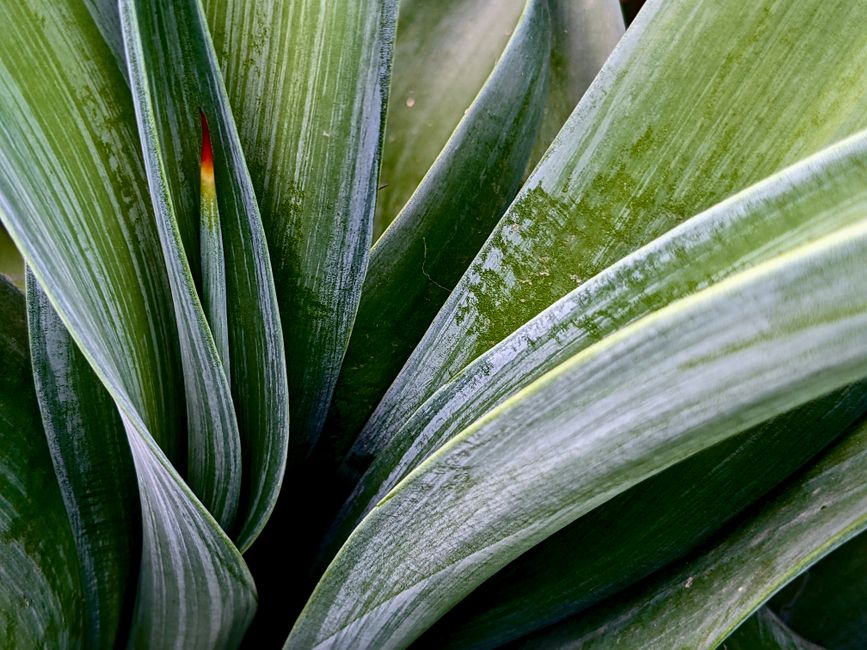
Agave nectar rode the same "natural sweetener" wave that lifted coconut sugar and raw honey into health-food status, and its reputation has outpaced what the actual composition supports. The gap between the marketing and the biochemistry is worth walking through directly.
The health halo
Agave nectar shows up in "healthier" recipes and health-food aisles constantly, largely because it's marketed as natural and plant-derived. Marketing aside, agave is still added sugar, and your body processes it that way.
What agave is actually made of
Agave nectar is roughly 70-90% fructose, a notably higher share than table sugar's roughly even split of glucose and fructose. That's actually the opposite of what the health-food framing implies — a higher fructose share, processed almost entirely by the liver, is more associated with raised triglycerides than glucose is.
Why the fructose share matters
Because fructose doesn't spike blood glucose the way glucose does, agave does carry a lower glycemic index than table sugar. That's a real difference for someone specifically watching immediate blood sugar spikes — but it comes with a tradeoff in how much reaches the liver, and neither number makes agave a lower-calorie or generally "healthier" choice overall.
What heavy fructose intake is linked to
Unlike glucose, which nearly every cell in the body can use directly, fructose is metabolized almost entirely by the liver, and a diet consistently high in fructose from any source is associated in research with increased fat production in the liver and higher triglycerides over time. This isn't unique to agave — the same concern applies to high-fructose corn syrup and, to a lesser extent, any sugar source with a high fructose share — but it's a direct answer to why "lower glycemic index" doesn't automatically translate to "better for you" once the full metabolic picture is considered.
Fructose also doesn't trigger the same fullness signals in the brain that glucose does, since it doesn't prompt the same insulin and leptin response, both hormones involved in telling the body it has had enough to eat. Some researchers point to this as one reason sweeteners high in fructose may make it easier to overconsume calories generally, alongside their direct effect on triglycerides, though this remains an area of ongoing study rather than a fully settled mechanism.
Where agave does have an edge
Its lower glycemic index and stronger sweetness, which means people tend to use less of it, are genuine points in its favor for glucose spikes specifically. It's not a health food, though — treat it the way you'd treat honey or table sugar: a sweetener to use in moderation, not a virtuous swap.
For someone specifically managing blood sugar rather than triglycerides, agave's gentler effect on an immediate glucose reading might make it a reasonable occasional choice over table sugar in a small amount — but for someone whose main concern is triglycerides or overall metabolic health, agave offers little advantage and arguably a modest disadvantage compared to a more balanced sweetener used in the same small quantity.
How it compares to honey and maple syrup
Honey and maple syrup both carry a more balanced glucose-to-fructose ratio than agave, closer to table sugar's split, along with small amounts of antioxidants and trace minerals that agave's more heavily processed nectar generally lacks. Neither is a meaningfully "healthier" everyday sweetener than table sugar either, but if forced to rank the common liquid sweeteners purely on fructose share, agave sits at the more concentrated end of that particular spectrum, which is worth knowing if fructose intake specifically is something you're trying to moderate.
All three liquid sweeteners also share a practical downside worth naming: because they're liquid, it's easy to pour more than intended, especially compared to measuring granulated sugar with a spoon. A quick pour of any of them into coffee or tea can carry more calories and carbohydrate than a shopper assumes, simply because liquid sweeteners are harder to eyeball accurately than a solid one.
How agave nectar is processed also varies more than the "raw" and "organic" labels suggest. Commercial agave production typically involves extracting the plant's juice and heating or chemically treating it to break starches down into fructose, a process that isn't meaningfully gentler or less industrial than how high-fructose corn syrup is produced, despite the very different marketing the two products receive. The "agave is more natural" framing holds up better as a story about branding than as a description of the manufacturing process.
The bottom line for anyone managing blood pressure, cholesterol, or blood sugar: agave nectar is a sweetener to use sparingly and occasionally, the same as any other, rather than a "safe" one to reach for more freely because of its health-food branding. If a recipe calls for it and you enjoy the flavor, there's no reason to avoid it specifically — just don't expect it to be doing you any favors that table sugar wouldn't in a similar small amount.