
 Google Play
What actually changes
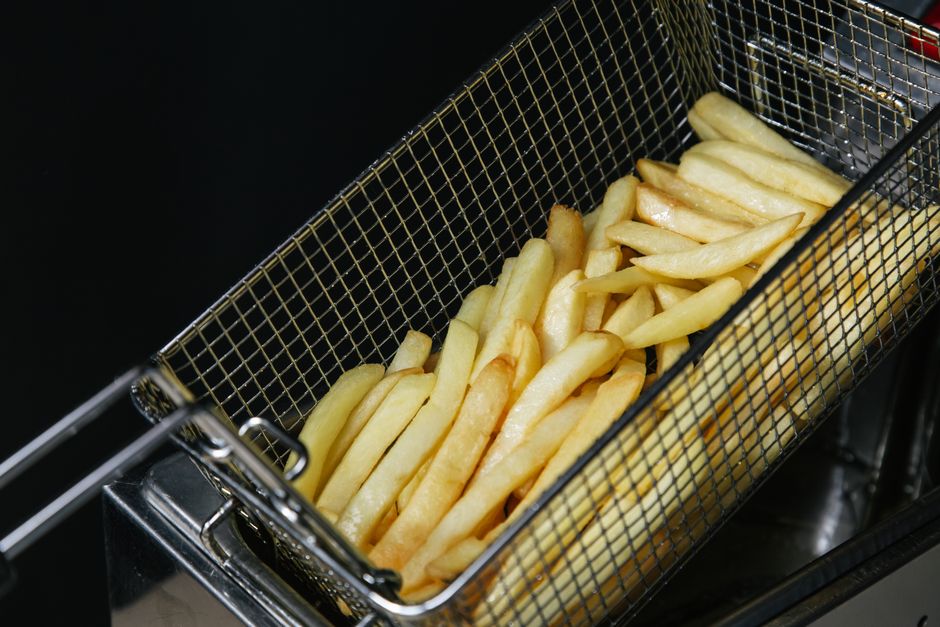
An air fryer circulates hot air around food instead of submerging it in oil, which means you can get a crisp, browned exterior using a tablespoon of oil or less instead of a cup. For foods normally deep-fried, that swap meaningfully cuts total fat and calories per serving. It's a real change, not a marketing gimmick. A batch of homemade fries that might absorb several tablespoons of oil when deep-fried can come out of an air fryer with only a fraction of that, while still browning and crisping on the outside through the same basic mechanism — hot, fast-moving air drying and browning the surface.
The size and shape of what you're cooking matters too. Smaller, more uniform pieces crisp more evenly than one large piece, since the hot air needs to reach all sides. Overcrowding the basket is the most common way people undercut the benefit, since food piled on top of itself steams instead of crisping, which pushes people to add oil to compensate for a texture problem that was really caused by overloading the basket.
Where it doesn't help
The appliance only changes the cooking method, not the ingredients. Frozen breaded chicken or pre-seasoned fries are still heavily processed and often high in sodium whether they're deep-fried or air-fried — the crisping method doesn't touch what's already mixed into the batter or coating. An air fryer makes a fried-style texture with less oil; it doesn't make a processed food unprocessed.
The acrylamide question
Acrylamide is a compound that forms in starchy foods cooked at high heat, most notably in potatoes and other browned, starchy foods, and it's been studied for potential long-term health effects at high exposure levels. Air frying doesn't eliminate acrylamide formation the way it eliminates most of the added oil — because the mechanism that produces browning at high heat is largely the same across frying methods, acrylamide can still form in air-fried starchy foods, sometimes at levels comparable to deep-frying. Cooking to a golden color rather than a deep brown, and avoiding very high temperatures for extended times, are the more relevant levers here, regardless of which appliance is doing the cooking.
Getting the most out of it
The clearest win is with foods you season yourself: vegetables tossed in a small amount of oil, plain chicken breast, or thin-cut potatoes. That's where you control both the oil and the salt, and where the calorie savings versus deep-frying are largest. Read the label if you're starting from a frozen or packaged item — the air fryer changes the cooking, but a food-logging app like Kairi is still useful for seeing what sodium and fat were already baked into the product before it ever hit the basket.
Is it worth buying one?
For someone who deep-fries food regularly, an air fryer is a genuinely useful upgrade with a clear, measurable benefit. For someone who rarely fries anything to begin with, it's mostly a faster, smaller substitute for a conventional oven — a fine appliance to own, but not one that changes the underlying nutrition picture much on its own. The honest way to think about it is as a tool that makes a specific improvement easier to sustain, not as a device that automatically improves whatever gets put into it.
How it compares to a regular oven
A conventional oven can produce similar results to an air fryer — roasting vegetables or baking chicken on a wire rack with a light coat of oil achieves a comparable fat reduction versus deep-frying, just with a longer cook time and less concentrated air circulation. The air fryer's real advantage is speed and convenience for smaller portions, since its compact size heats up faster and circulates air more intensely around a smaller amount of food than a full-size oven does. For someone already comfortable roasting on a sheet pan, an air fryer is more of a convenience upgrade than an entirely new capability.
Cost is also worth factoring in honestly: a decent air fryer is a real purchase, and for someone who already owns a functional oven and doesn't fry food often, the marginal benefit may not be worth the counter space and the expense. The appliance is most clearly worth it for someone replacing a genuine deep-frying habit, less so for someone simply looking for a healthier way to reheat leftovers.
What air fryers are genuinely good at: reheating
One underrated use is reheating leftovers that would otherwise go soggy in a microwave — leftover fried food, roasted vegetables, or pizza crisp back up in an air fryer in a way a microwave simply can't replicate, since the microwave heats mostly through moisture and steam rather than dry, circulating heat. This doesn't change the nutrition of the reheated food one way or the other, but it does mean fewer leftovers get thrown away for being unappealingly soft the second time around, which is a genuine, if indirect, benefit for anyone trying to reduce food waste alongside eating well.
It's also worth setting realistic expectations about capacity. Most home air fryer baskets are considerably smaller than a full sheet pan, which means cooking for a larger household often means working in batches — a real time cost that's easy to overlook when comparing a single-serving air fryer recipe to a full-family sheet pan dinner cooked all at once in a regular oven.