
 Google Play
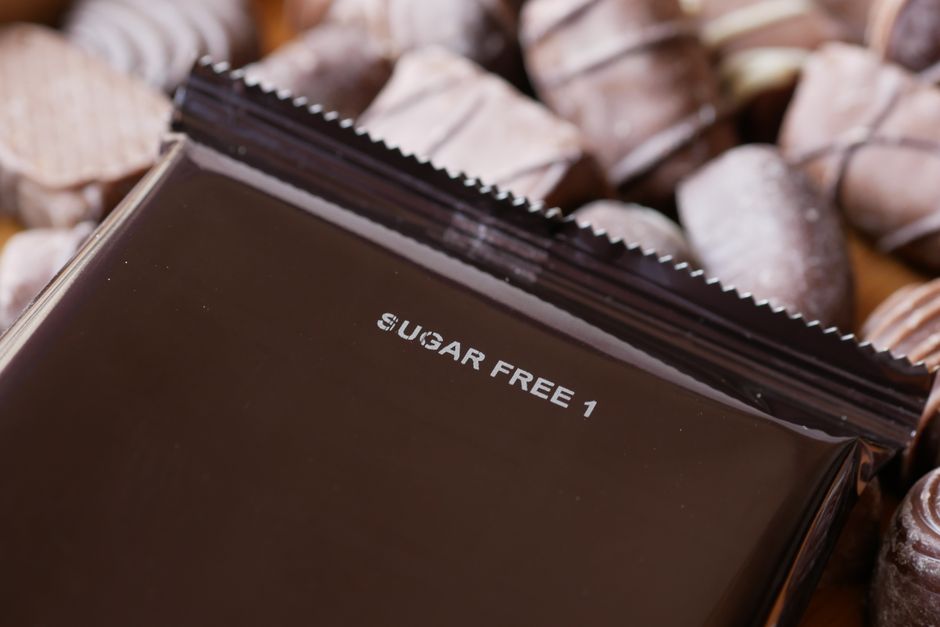
Erythritol, xylitol, sorbitol, maltitol — sugar alcohols show up in sugar-free gum, "keto" baked goods, and diabetic-friendly candy, usually with a promise that they won't affect blood sugar the way regular sugar does. That promise is mostly, but not entirely, true.
What sugar alcohols actually are
Despite the name, sugar alcohols are neither sugar nor alcohol in the way those words usually mean. They're a category of carbohydrate, technically called polyols, with a chemical structure partway between a sugar and an alcohol molecule, which is exactly where the name comes from. They occur naturally in small amounts in some fruits and vegetables, though the versions used in packaged food are typically manufactured for consistency and scale.
Common types you'll see on labels
- Erythritol: mostly passes through the body unabsorbed and unchanged, giving it close to zero calories and a minimal blood sugar effect for most people.
- Xylitol: has a modest blood sugar effect, smaller than table sugar's, and is common in sugar-free gum and mints.
- Sorbitol and maltitol: absorbed more than erythritol or xylitol, giving them a more noticeable, though still generally lower, blood sugar effect compared to regular sugar.
How they affect blood sugar
Because sugar alcohols are absorbed incompletely and metabolized differently than regular sugar, they generally produce a smaller rise in blood sugar per gram. This isn't uniform across every type, though — maltitol in particular has a higher glycemic effect than the others on this list, closer to that of regular sugar than most people assume, and is sometimes underestimated because of how it's marketed alongside lower-impact sugar alcohols. For anyone closely managing blood sugar, it's worth treating "sugar alcohol" as a category with a range of effects rather than a single, uniformly negligible one, and checking which specific one is used before assuming a product will have a minimal effect.
Researchers score this effect using the glycemic index, a scale that ranks how quickly a food raises blood sugar relative to pure glucose. On that scale, erythritol and xylitol sit close to zero, while maltitol scores meaningfully higher, in some estimates approaching half of table sugar's own glycemic index value — a useful way to think about the range rather than treating every sugar alcohol as functionally interchangeable.
The "net carbs" question
Some packaging subtracts sugar alcohols (and fiber) from total carbohydrate to arrive at a "net carbs" number, a marketing convention rather than an FDA-defined term. This math assumes the sugar alcohol has close to zero effect on blood sugar, which is a reasonably fair assumption for erythritol but a less accurate one for maltitol. Treating "net carbs" as an approximation rather than a precise number is the safer approach, particularly for maltitol-containing products, and someone tracking blood sugar closely may want to count at least half of a maltitol gram toward their carbohydrate total rather than subtracting it entirely.
Sugar alcohols vs. artificial and natural sweeteners
Sugar alcohols are a distinct category from both artificial sweeteners like sucralose or aspartame and plant-derived non-nutritive sweeteners like stevia or monk fruit. Artificial and plant-derived sweeteners are typically many times sweeter than sugar by weight and are used in tiny amounts with essentially no calories or carbohydrate content, while sugar alcohols are used in amounts closer to sugar itself and do carry some calories and carbohydrate, just less than an equivalent amount of table sugar. Products sometimes blend a sugar alcohol with a non-nutritive sweetener specifically to balance sweetness and texture, which is worth knowing if you're trying to identify exactly what's contributing to a product's carbohydrate count.
The digestive side effect worth knowing
Sugar alcohols that aren't fully absorbed can draw water into the intestine or get fermented by gut bacteria, which is why eating a larger amount in one sitting is commonly associated with bloating, gas, or a laxative effect for many people. This is unrelated to blood sugar but is often the more immediately noticeable effect, especially for anyone eating multiple sugar-alcohol-sweetened products in the same day. Sensitivity varies a lot between individuals, and some product labels for sorbitol in particular carry a required warning about this effect when consumed in excess.
A practical way to use them
A reasonable approach is to treat sugar-alcohol-sweetened products as a genuine improvement over their full-sugar counterparts for most people managing blood sugar, while still checking the specific type used and not assuming "sugar-free" means "zero effect." Introducing a new sugar-alcohol product gradually, rather than eating a large serving all at once, is also a sensible way to gauge your own digestive tolerance before making it a regular part of your routine.
If you're managing blood sugar closely enough to log meals or use a continuous glucose monitor, sugar alcohols are also a good category to test individually rather than assume from general guidance: trying one erythritol-sweetened product and one maltitol-sweetened product on separate, otherwise similar days can show you directly how your own body responds, which is more precise than relying on the general "sugar alcohols affect blood sugar less" rule alone.