
 Google Play
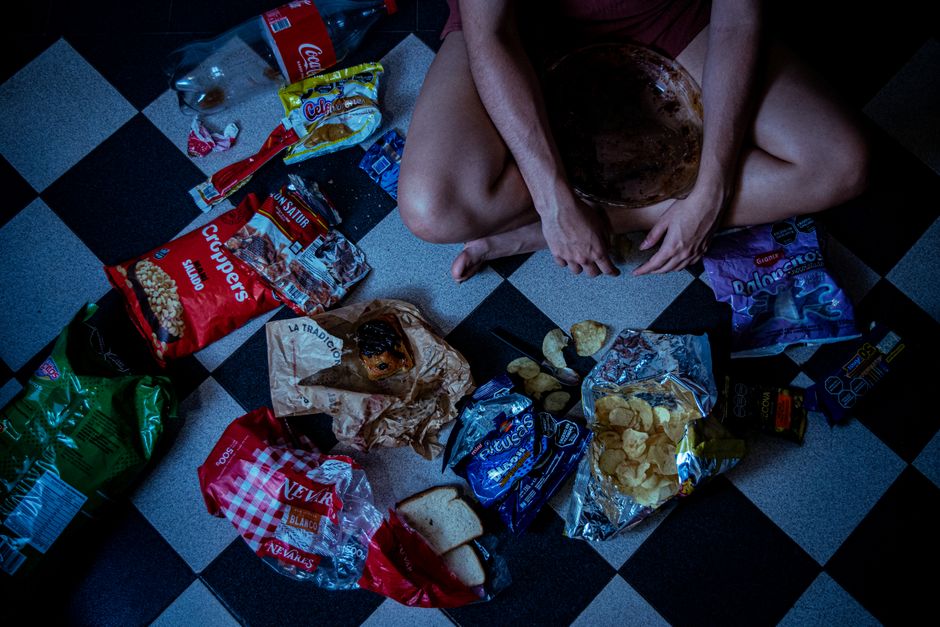
Why stress eating happens
Cortisol released during stress increases appetite and specifically drives cravings for high-fat, high-sugar food, and it does this through a fairly direct biological pathway rather than a lapse in character. Elevated cortisol interacts with insulin and the brain's reward circuitry in a way that makes calorie-dense food feel more urgent and more rewarding than it would on a calmer day. This isn't weak willpower — it's a real hormonal pull, and knowing that reframes the goal: not eliminating the urge, but changing what happens right after it shows up.
The pull is also stronger for some people than others. Chronic, low-grade stress — a demanding job, a long caregiving stretch, an ongoing money worry — tends to produce more persistent stress eating than a single acute event, because cortisol stays elevated for longer and the craving cycle never fully resets. Recognizing which kind of stress you're dealing with matters, because a ten-minute pause helps far more with a single bad afternoon than it does with a grinding, months-long stretch that needs a different kind of intervention entirely.
Stress eating vs. real hunger
One of the most useful skills here is learning to tell the two apart, because they feel similar in the moment but behave very differently. Real hunger builds gradually over a couple of hours, is satisfied by more or less any reasonable food, and fades once you've eaten enough. Stress-driven eating tends to arrive suddenly, points at a specific food rather than food in general, and often doesn't fully resolve even after you've eaten it — leaving a slightly unsatisfied, restless feeling that a snack didn't actually fix. Noticing that gap between "I ate" and "I feel resolved" is often the clearest sign of which kind of urge you were responding to.
The pause that actually works
Give it ten minutes before deciding whether to eat, and do something with your hands during that window: text a friend, step outside, water a plant. Most stress-driven urges lose intensity within ten minutes, while genuine hunger doesn't. Log what happened afterward instead of judging yourself for it — the data is more useful than the guilt, and over a few weeks a pattern usually becomes visible: a specific meeting, a specific time of day, a specific person, that reliably precedes the urge.
Stock your space for the 3pm you
- Pre-stock the reach zone: keep something satisfying nearby — fruit, nuts, yogurt — so the easiest option isn't also the densest one.
- Separate stress cues from food cues: if you always snack at your desk while answering email, that pairing is doing more work than hunger is.
- Build one non-food outlet: a short walk or a call that's actually available at 3pm on a bad day, not just in theory.
Why restriction backfires
Banning a specific food outright is one of the least effective responses to stress eating, and it often makes the cycle worse rather than better. Telling yourself a food is completely off-limits tends to increase how much you think about it, and when stress eventually breaks through the rule — which it usually does — the result is often a larger amount eaten in one sitting, plus a heavier layer of guilt on top. Keeping the food available but building a real pause before reaching for it tends to hold up better over months than an all-or-nothing rule does.
When it's more than stress
Occasional stress eating is normal and not something to fix perfectly. If eating feels compulsive, secretive, or part of a cycle you can't interrupt on your own, that's a conversation for a doctor or therapist, not a habit tweak — most people just need a shorter gap between craving and choice. A pattern that involves eating in secret, eating past the point of physical discomfort on a regular basis, or feeling unable to stop once started is worth naming out loud to a professional rather than managing alone indefinitely.
What a realistic week looks like
It's worth setting expectations honestly: most people don't eliminate stress eating, they shrink it. A realistic week isn't zero stress-driven snacking, it's fewer episodes, smaller ones, and less guilt attached to the ones that still happen. Measuring progress against that more forgiving bar, rather than a perfect standard nobody actually hits, tends to keep the whole effort sustainable instead of turning into another source of stress in its own right — which would defeat the purpose entirely.
It also helps to notice that stress itself is rarely constant. A demanding week at work, a hard conversation at home, or a poor night of sleep will predictably raise the pull toward food, and building in a little extra grace during those stretches — rather than treating a harder week as evidence the whole approach has failed — keeps a temporary spike from turning into a permanent backslide.